A record of 208 Ami
across twelve regions
Start in Hometown with one Ami and a handful of gourds. Walk terraced fields, limestone caves, a moonlit lake and a volcano rim. Finish at the Summit with a full dex and a team strong enough to hold the arena while your screen is off.
Free · runs in the browser, nothing to install · sign in with Google or Apple · everyone shares one server
Part one
One loop: walk, meet, catch, raise
A turn-based RPG you can play with one finger on a phone or a keyboard on a desktop. The four panels below are the four screens you will see most.
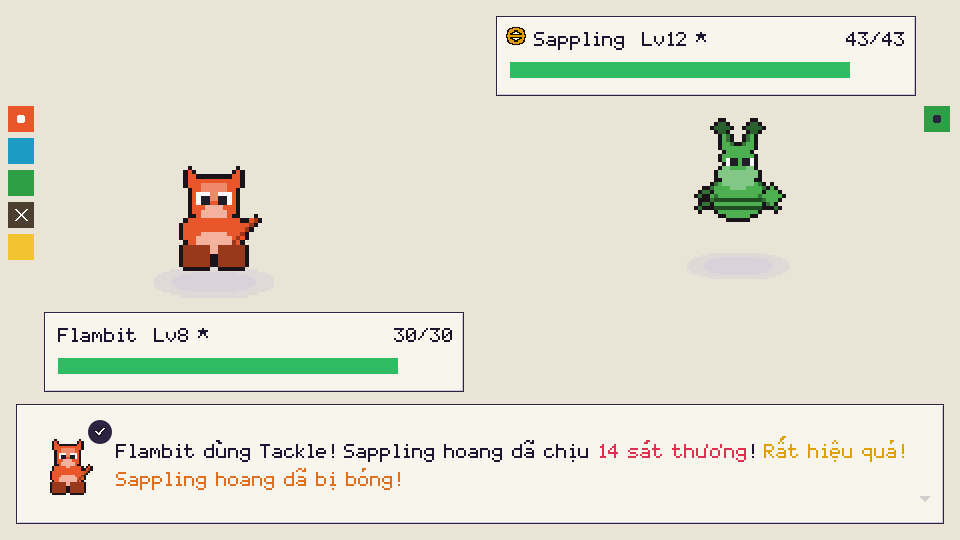
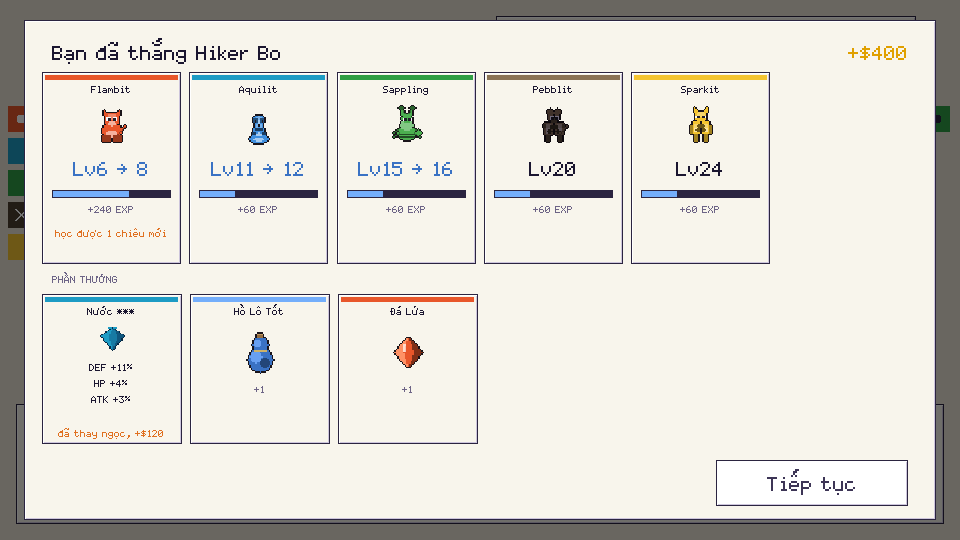
Catching with gourds
Knock the health down before you throw — the odds differ enormously. The three gourds differ in exactly one number: how much they add to the catch rate. The shop prints that number rather than making you guess from the price.
A team of six
Six is the cap. The eight types counter each other in a ring, so a stronger single-type team loses to a broader one — team composition decides fights more than level does. Ami you are not using sit in storage, 120 slots by default.
Evolution
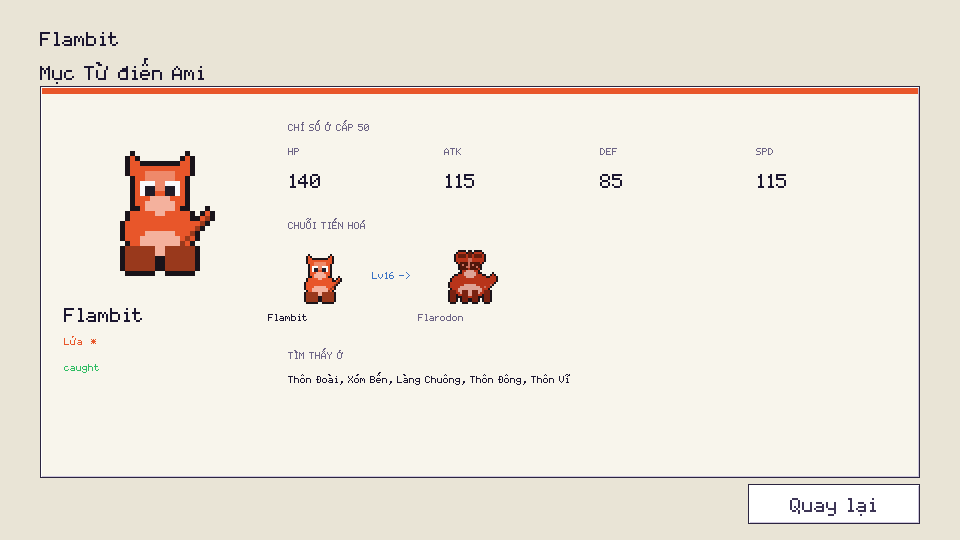
80 species spread into 208 Ami, because most have several stages. Reach the level or use the right stone and an Ami changes shape and base stats, and keeps everything it has learned.
Quests and the people you meet
13 story quests and 23 trainers along the way. Eight of them are gym leaders — beat all eight to earn the first badge.
Part two
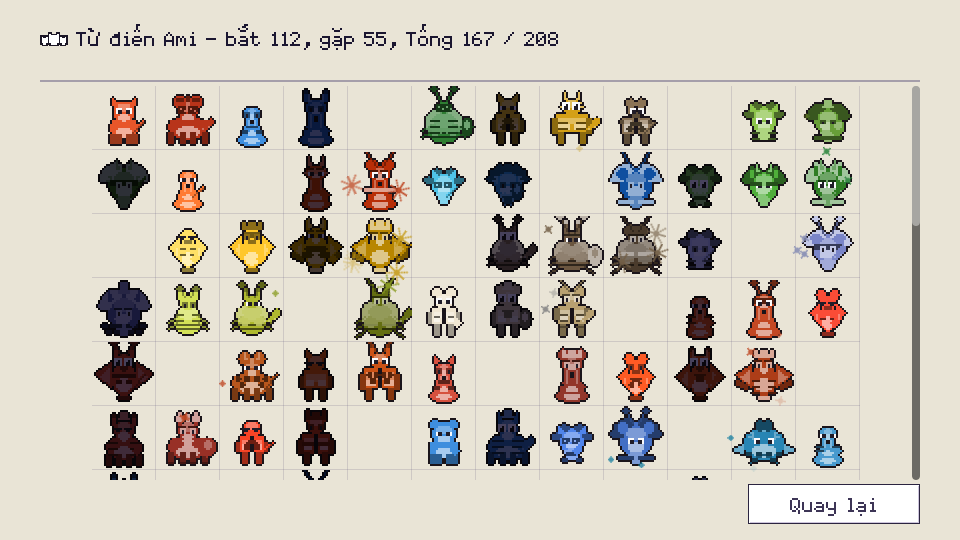
The dex: 208 Ami, 80 species, eight types
The two numbers do not contradict each other. 80 species is the number of evolution lines — the genuinely distinct entries in the book. 208 Ami is the number with their own artwork, because a species that passes through several stages is a different creature at each one. Exactly 26 Ami per type.
| Type | Ami | Strong against | Weak against | |
|---|---|---|---|---|
 |
FireCindrake | 26 | Grass, Bug | Water, Fire, Rock |
 |
WaterTidoar | 26 | Fire, Rock | Water, Grass |
 |
GrassThornguard | 26 | Water, Rock | Grass, Fire, Flying, Bug |
 |
ElectricThunderwing | 26 | Water, Flying | Electric, Grass, Rock |
 |
RockStonehide | 26 | Fire, Flying, Bug | Electric |
 |
FlyingGalewing | 26 | Grass, Bug | Electric, Rock |
 |
BugChrysalin | 26 | Grass | Fire, Rock, Flying |
 |
NormalFurveil | 26 | — | Rock |
| Move ↓ / Defender → | Fire | Water | Grass | Electric | Rock | Flying | Bug | Normal |
|---|---|---|---|---|---|---|---|---|
| Fire | ×½ | ×½ | ×2 | · | ×½ | · | ×2 | · |
| Water | ×2 | ×½ | ×½ | · | ×2 | · | · | · |
| Grass | ×½ | ×2 | ×½ | · | ×2 | ×½ | ×½ | · |
| Electric | · | ×2 | ×½ | ×½ | ×½ | ×2 | · | · |
| Rock | ×2 | · | · | ×½ | · | ×2 | ×2 | · |
| Flying | · | · | ×2 | ×½ | ×½ | · | ×2 | · |
| Bug | ×½ | · | ×2 | · | ×½ | ×½ | · | · |
| Normal | · | · | · | · | ×½ | · | · | · |
Part three
Twelve regions, from Hometown to the Summit
The world is a single line with exactly one fork: past Route 3 you choose the cave road or the lake road, and the two meet again at Ridgeport. Three regions have a nurse — those are the three towns, and the three places you can fast-travel back to.
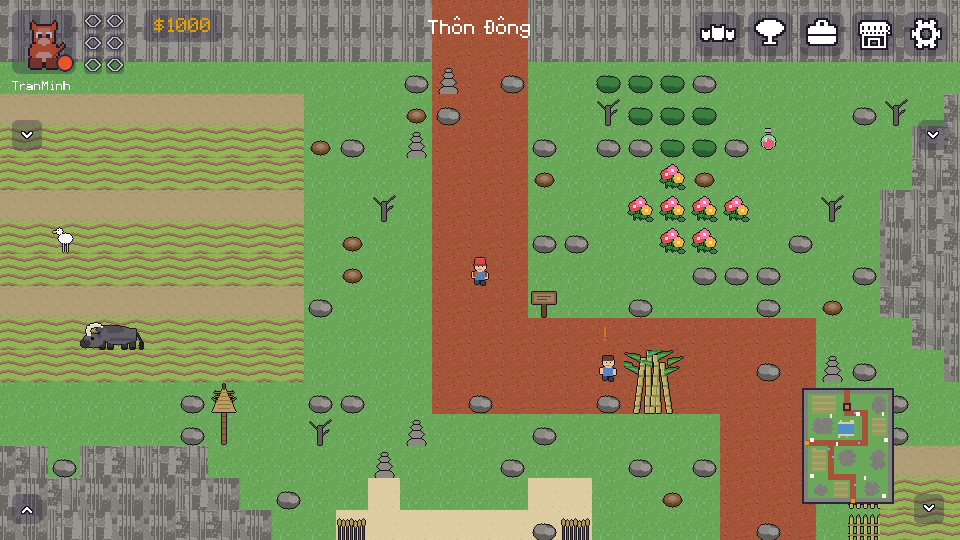
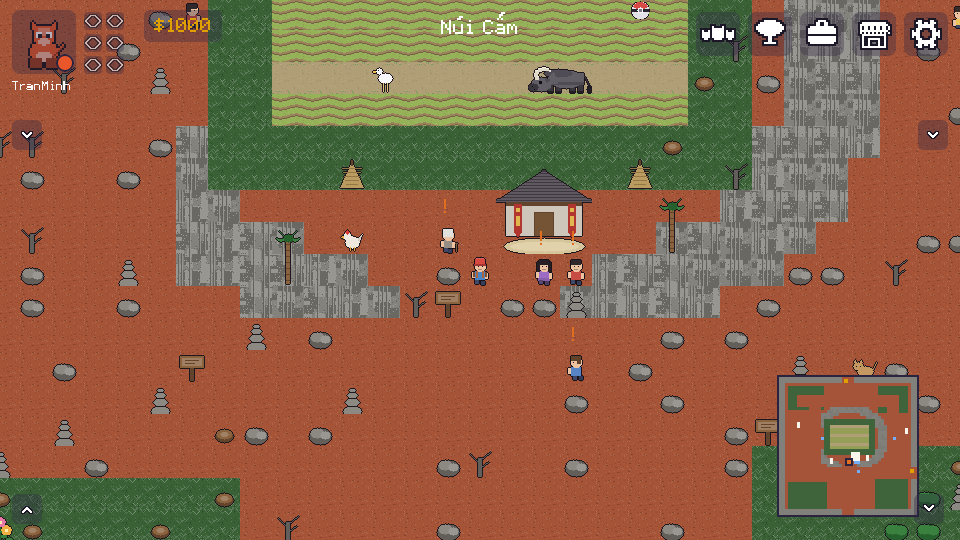
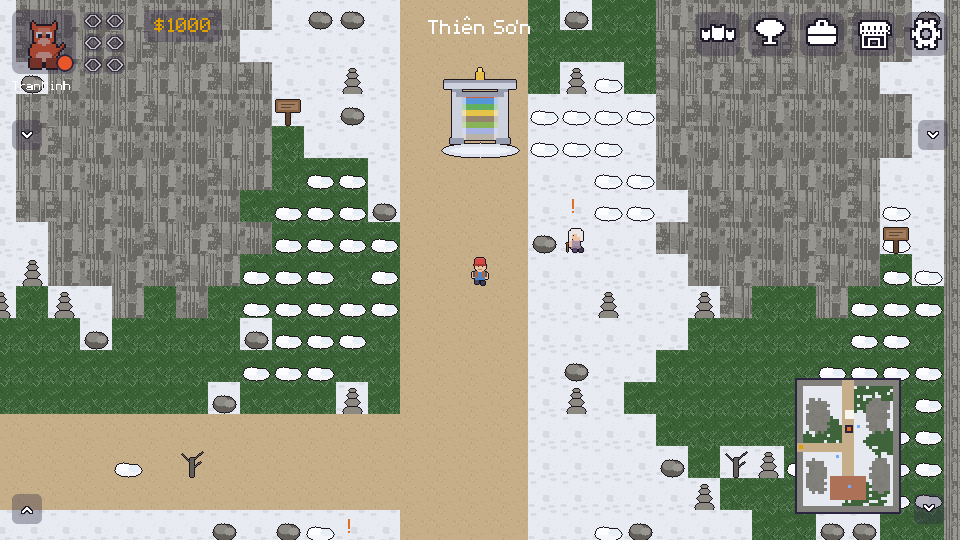
| # | Region | Scenery | Leads to |
|---|---|---|---|
| 1 | Hometowntown | Rice village, tiled roofs, fish ponds | Route 1 |
| 2 | Route 1 | River landing, wooden bridge, paddy fields | Brookvale |
| 3 | Brookvaletown | Market street, boat dock | Route 2 |
| 4 | Route 2 | Terraced fields, a small lake, limestone hills | Route 3 |
| 5 | Route 3 | A junction — the only fork | Echo Cave or Mirror Lake |
| 6a | Echo Cave | A cave road, dark the whole way | Ridgeport |
| 6b | Mirror Lake | A lake with a causeway across the middle | Ridgeport |
| 7 | Ridgeporttown | Where the two branches meet again | Deep Forest |
| 8 | Deep Forest | Dense forest, closed canopy | Emberpeak |
| 9 | Emberpeak | Volcano crater, black rock | Highland Pass |
| 10 | Highland Pass | Terraces to the north, snow to the south | Summit |
| 11 | Summit | Cliffs and snow. The final stretch. | — |
Part four
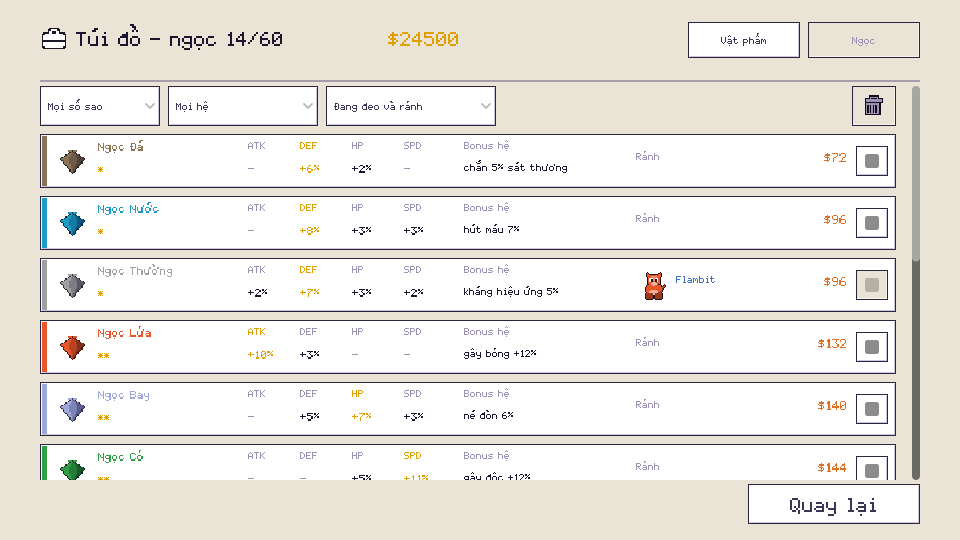
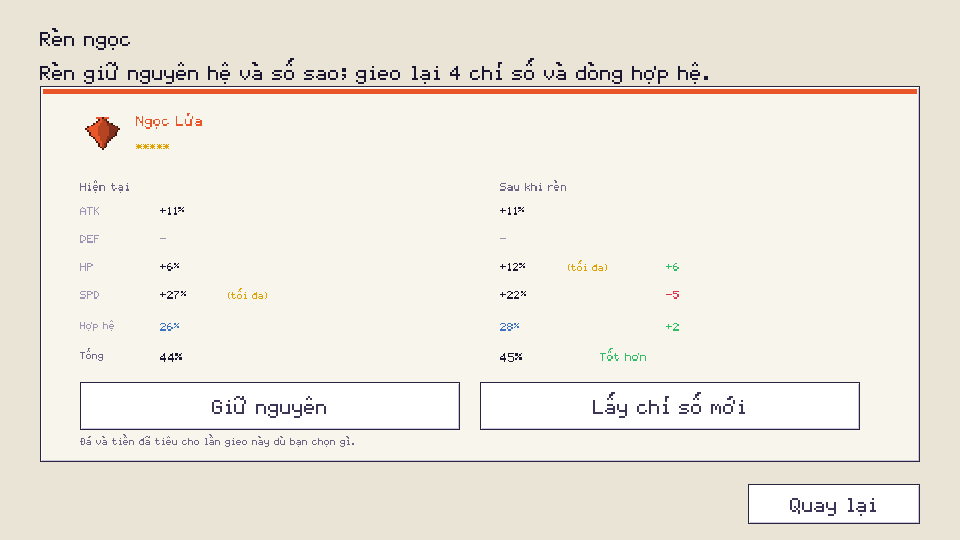
Depth: gems, reforging, badges
Once the twelve regions are done, most of the remaining time goes into these three.
Six badges
Badges are not medals for the wall. Each adds stats to the whole team and unlocks something that was closed from the start. All six is +24% to every stat.
| Badge | Requirement | Unlocks | Stats |
|---|---|---|---|
| Challenger | Beat 8 gym leaders | One more gem slot on every Ami | +3% |
| Collector of the Century | Collect all 80 Ami species | 60 more storage slots | +3% |
| Ami Training Master | Win 1000 fights against wild Ami | +20% evolution success, unlocks Biscuits in the shop | +4% |
| Ami War God | Reach 5000 arena rating | Fleeing from wild Ami always works | +4% |
| Angel of Light | Not announced | Not announced | +5% |
| Angel of Darkness | Not announced | Not announced | +5% |
Type collections
Catch every Ami of one type and that type pays out on its own: items, money, and a gem of the type you just completed. Eight types, eight times.
Part five
One server, no lobbies
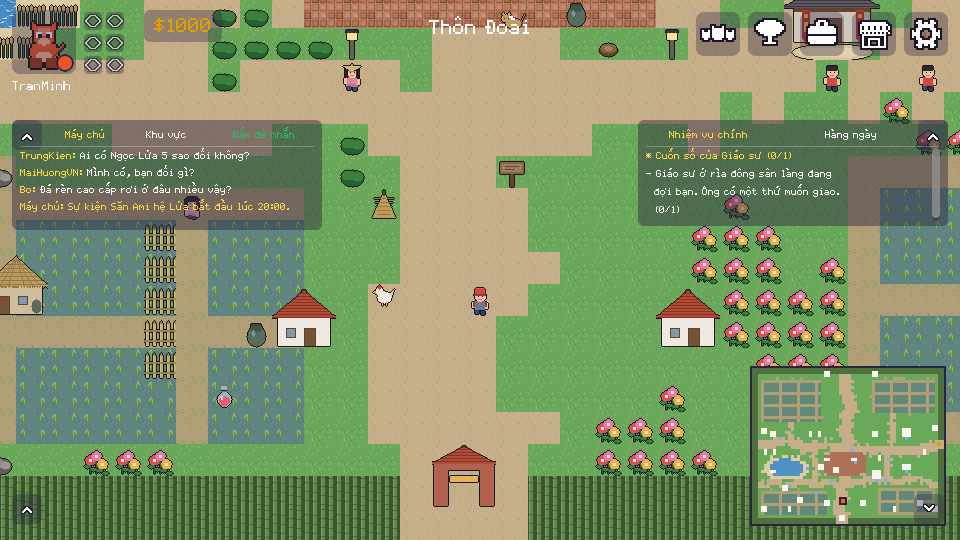
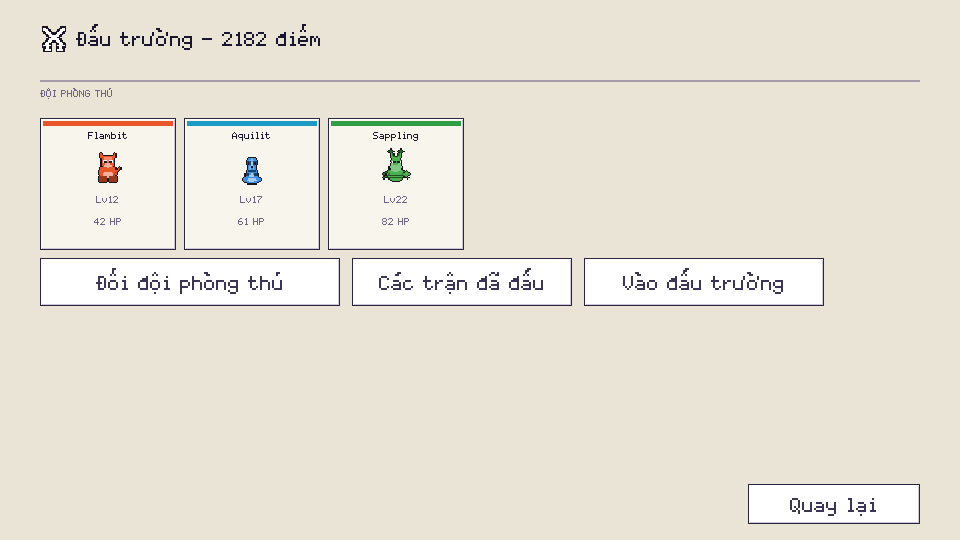
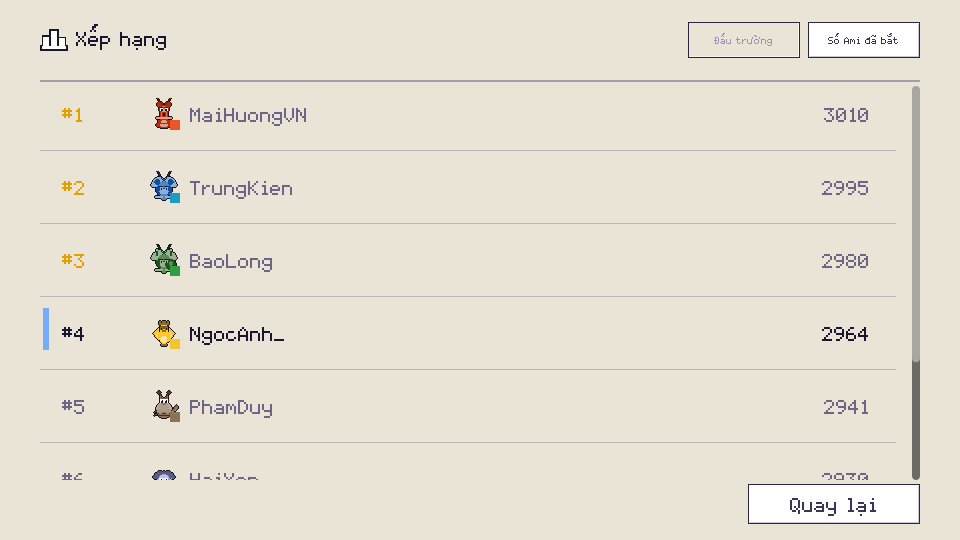
There is no separate multiplayer mode to switch on. Everyone stands in the same world from the first minute.
Seeing each other on the map
Other players appear on the road beside you. Tap one to see their profile and team.
Two chat channels
One channel for the whole server, one for the region you are standing in. Both sit on the map and fold away.
Trading Ami
Send an offer, pick the Ami, both sides agree. The server settles the trade, so there is no state where one player has lost an Ami and the other has not received it.
Timed events
Their own goals — catch a number of Ami of one type, reach an arena rating — with rewards and a countdown.
Part six
Four things worth knowing first
You will run into all four within the first fifteen minutes. Better said up front.
| You need a connection the whole time | Lose the connection and the game waits rather than carrying on. That is the price of keeping progress on the server: it is also why there are never two different saves to choose between. |
| One device at a time | Sign in on a second device and the first is pushed out. Switching devices is fine — sign in the same way you did before — but not both at once. |
| Signing in is required | There is no anonymous trial mode. Choose Google or Apple ID — the two are separate accounts, so pick one and stay with it. In return, progress lives on the server from the first minute and opens again on any device. |
| Browser only, for now | The apps are not released yet. A phone browser plays it normally, with nothing to install. |
Part seven
The first three minutes
- Open the game in a browser and sign in. No download, no install. One tap on Google or Apple and you are in — and progress is kept on the server from that moment.
- Choose a starting type. Eight types, one starter each. The picker shows stats and evolution stages before you commit.
- Step into the grass at the edge of the village and throw a gourd. Knock the health down first — the catch odds differ enormously.
- Remember how you signed in. Google and Apple are two separate accounts, not two doors into the same one. Come back the same way and your progress is there; the pause menu always shows which one you are using.
Start in Hometown
Plays on phones and desktops alike.
Neither app has a release date yet. The browser build is the full game, not a demo.